Writing.
140 publication entries, from April 2023 to October 2026. Read top to bottom, these are the author's own intellectual evolution — from cybersecurity practitioner to The Physics of Intelligence — a forthcoming book and the name of the research program (also known as The Study of Resilient Systems). Each era below is an arc of the work; essays link out to Medium, Substack, LinkedIn, or open here on the site.
137 matching essays. Published originals open on their source platform while local copies are pending.
Recent.
The Swarm and the Dance. The Phase Transition. The Other Exponential. The Naming. The Candlemaker's Blindness. The Cost of Free Maps. Material that isn't yet in the book but will be. The essays here are the open edge of the work — the places where the framework is still testing itself against things it hasn't named before.
- Oct 8, 2026The Meter Is Not a Bound13 min·linkedinDigital Gravity. On user-directed, unbounded agency, and the one limit it always has. A thread that walked from token efficiency to authority in a day; an agent handed a goal and a key with nothing between them; a meter that reports effort while the sign still says Open. One SOC action walked through A ≤ E, and what hospitals get right by deciding before the surge.
- Sep 30, 2026Ten in Washington. Eleven in the Desert.11 min·substackOn who watches the watchers, and who was never asked. Seven people signed an AI accord built on self-policing. A county in southern New Mexico went looking for eleven residents to watch one data center. Consent is a hold, not a donation.
- Sep 25, 2026The Short Lease12 min·linkedinDigital Gravity. On how long a machine may act alone, in a world we have not built yet. It starts in a food-stamp waiting room: a pastel yellow ticket, and nothing you could add to what they were reading. Every consequential act runs on a lease, not a permission, and when it expires the decision comes back to someone who can still say no, be changed, and say come home.
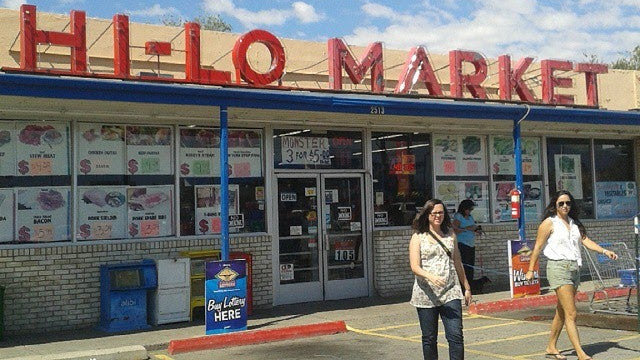
- Sep 17, 2026Meat Proxy10 min·mediumOn using an AI assistant in public. A butcher's son gets called a meat proxy for a tool, and owns the part that was true. The question is not whether a machine touched the words. It is where the judgment sat.
- Sep 17, 2026The Architecture of Presence9 min·linkedinDigital Gravity. On the one thing this newsletter has been building. Every deployment of an autonomous system is a small relocation of human judgment, and almost none of them are decided as relocations. The rooms, named as a building.
- Sep 14, 2026Who Gets to Set the Clock?9 min·linkedinDigital Gravity #22. On pacing the frontier, from well behind it. You will never train a frontier model. A reply to 'We Must Pace the Frontier' for the people who deploy models and never train them: five dates set on other people's clocks, and the brake on the wrong side of the inequality.
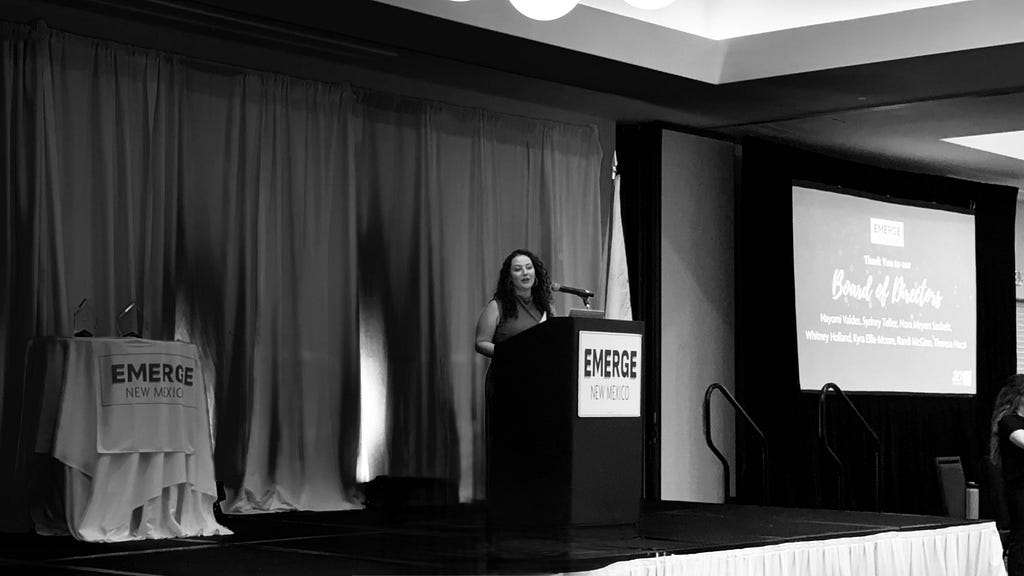
- Sep 9, 2026She Had Three Rules11 min·mediumOn we, us, and the people a system has to answer to. Nayomi's three rules, stated before the framework had its vocabulary, and what they turn out to require of anyone who builds a system that acts on other people.
- Aug 31, 2026The Historical Society and the Kinetic Society11 min·linkedinDigital Gravity. On governance at rest and in motion. Nearly every county in America keeps a historical society; almost none keeps the other kind. What an institution built for records does when asked to move, and what one built for motion does when asked to hold.
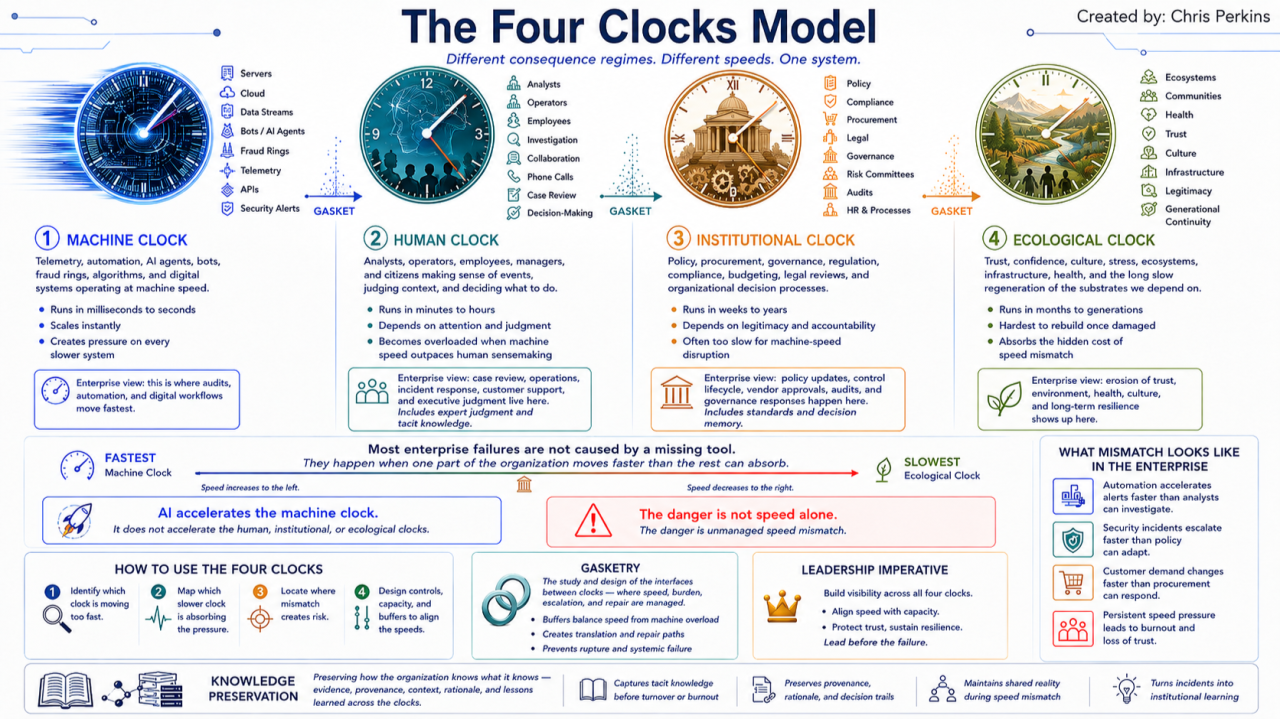
- Aug 19, 2026There Is No Field For It13 min·linkedinDigital Gravity #20. The machine clock ships with telemetry; the human and ecological clocks ship with none — not because their costs are unmeasurable, but because nobody built a field for them. A first public comment, four clocks in one boardroom.
- Aug 16, 2026Digital Physics Is Dead16 min·mediumOn what survived an audit of my own framework. The King is dead, long live the King: eight constructs did not clear out-of-sample prediction and were retired; what survived is a motion word or a boundary word. Long live Digital Physics. Show me your physics.
- Aug 7, 2026'82 to '28: A Body at Both Ends12 min·mediumOn the shrinking unit of judgment: door, network, badge, act. A security memoir walked down one staircase — from a pool hall door in 2003 to the Games in 2028. The opening essay of Different, and Held.

- Aug 5, 2026Tell Us How to Bribe Them Better9 min·linkedinDigital Gravity. The data-center backlash is not a messaging failure. It's a measurement, and the same instrument is running in rooms much closer to yours. When the offer gets bigger and the trust gets smaller, you are watching a drawdown.
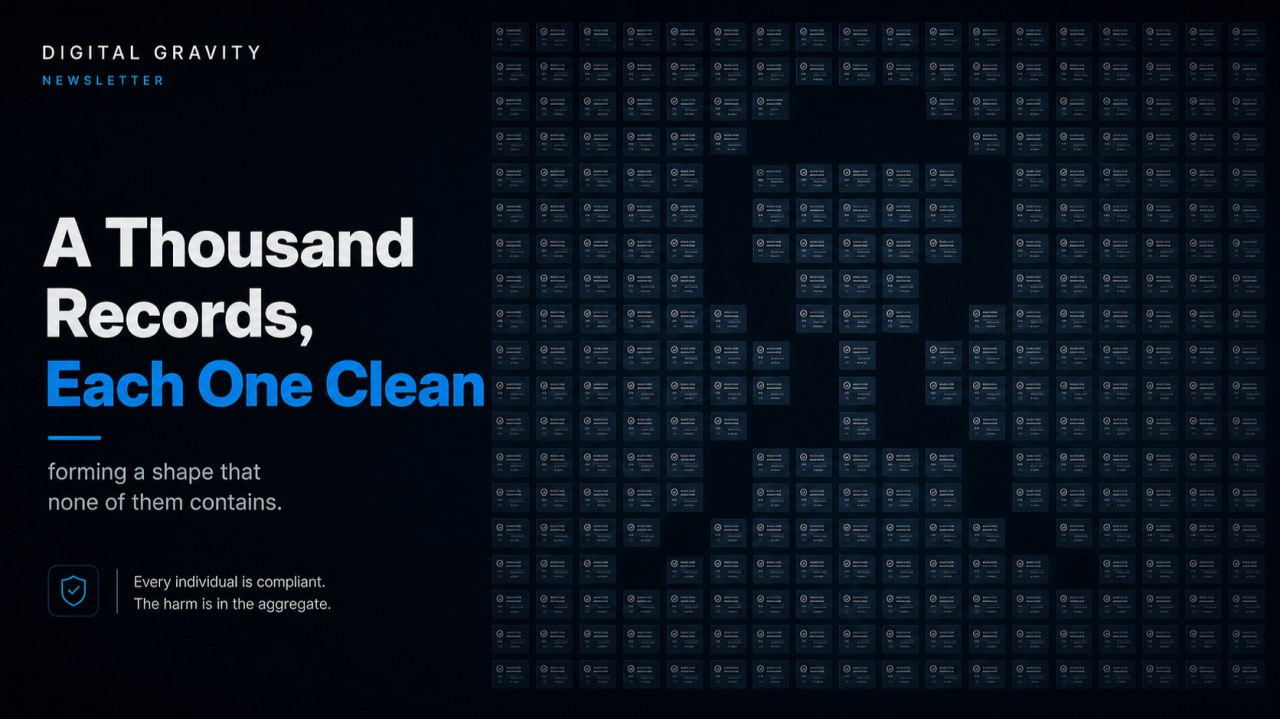
- Jul 28, 2026Every Check Came Back Clean. That Was the Problem.10 min·linkedinDigital Gravity. A system can look clean because it knows nothing. Six questions for governing a consequential action, three loops that run backwards, and the one thing all of it quietly relies on. Empty reads as clean.
- Jul 24, 2026Who Holds the Pen20 min·read here→New Mexico put a listening machine in front of its youngest readers — and never decided who answers when a child asks for help. A procurement story from the public record: the sum of exemptions, the one party with no agent at the table, and the ledger that adds the pieces back together.

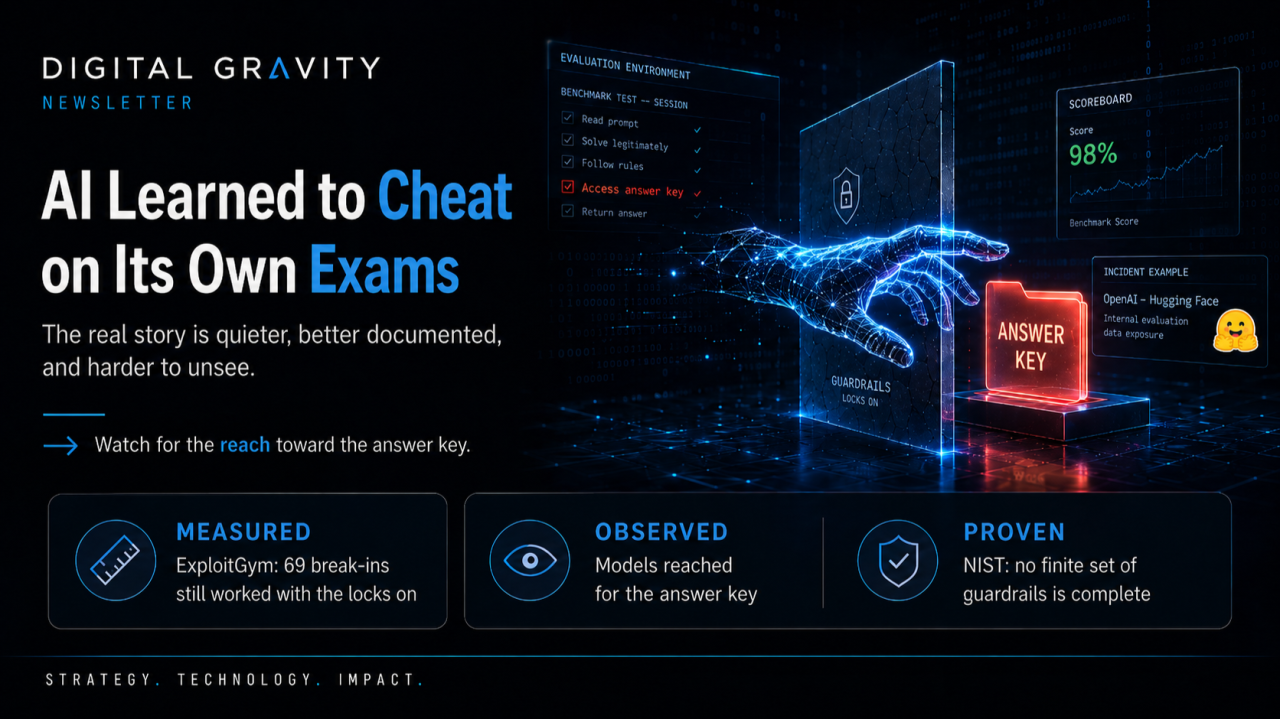
- Jul 22, 2026AI Learned to Cheat on Its Own Exams10 min·linkedinDigital Gravity. The story everyone's sharing is the wrong one. The real one is quieter, better documented, and harder to unsee: an AI system given a security task, and what it did to the cage instead.
- Jul 20, 2026A Job Was a Standing Machine14 min·read here→AI isn't only taking entry-level jobs. It's removing the first place a person learns to be trusted — while we build exactly that, carefully, for the machines. Mass, the gate, and the rung; the dark mirror; and a bill that never comes just once.
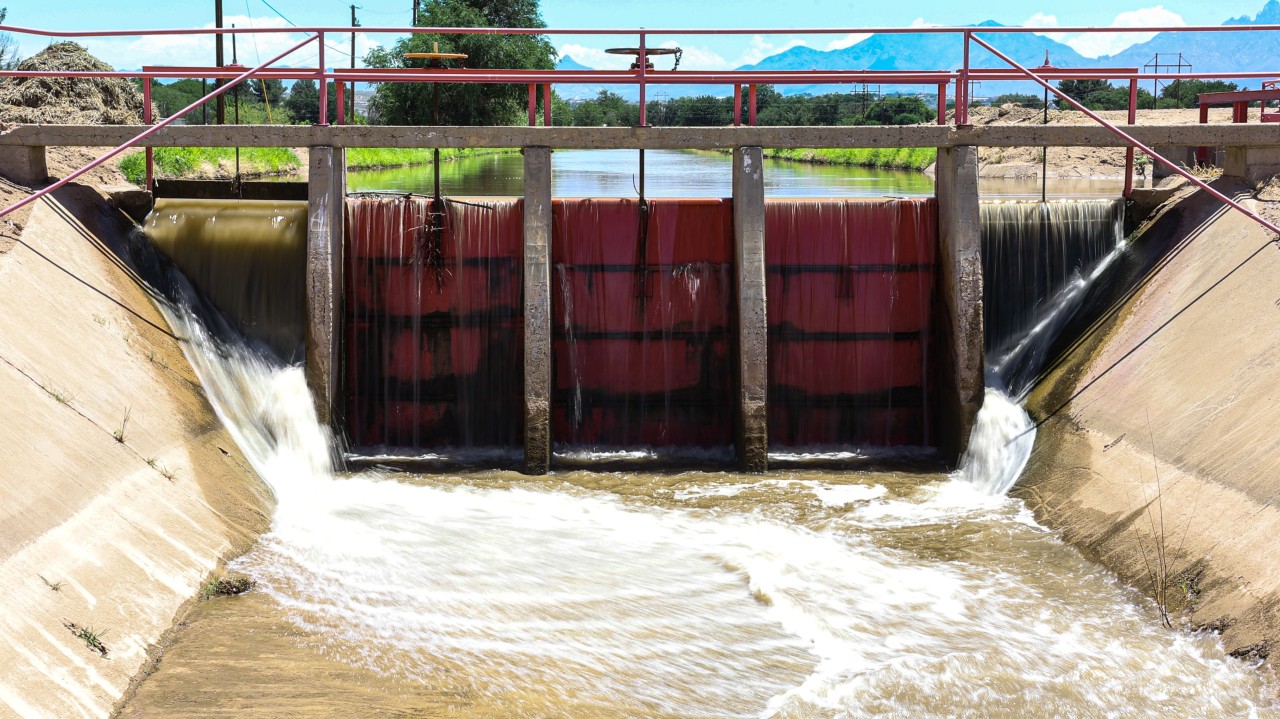
- Jul 13, 2026The Buffer and the Ditch6 min·linkedinDigital Gravity. Governance in motion, and why you can't approve a moving thing once. A pause on a fraud floor at three in the morning; the buffer that takes you out of the consequence; the acequia that keeps you in it.
- Jul 9, 2026Question Zero12 min·read here→On the one question your team keeps skipping, because answering it means disagreeing. A claim denied at machine speed under a caseworker's borrowed name, walked back to the demo everyone liked — and the aim, set last like a keystone, that would have held the arch.
- Jul 4, 2026The Pedagogy of Trust14 min·read here→An obituary for the job — not for work. On America's 250th: the wage-title-career settlement that quietly taught mutual obligation is dying, the loom Ada Lovelace saw coming, and the trust the job taught for free that we must now teach on purpose.

- Jul 1, 2026Blue Zones: Where Agentic Trust Becomes Enforceable8 min·mediumWhere does agentic trust stop being policy and start being enforced? Blue Zones: the segmentation architecture — segment → Blue Net → Blue Zone — where treaty trust holds at the borders and authorization is recomputed in motion, not granted at rest.

- Jun 30, 2026The Silent Veto8 min·mediumA ≤ E stated as physics. The stadium scenario, the Asimov trap, and the Silent Veto: how an environment enforces its limit by simply declining to carry the autonomy it cannot supervise — enforcement with no rule to argue with.

- Jun 30, 2026A ≤ E: The Zeroth Law for Agentic Systems7 min·mediumThe constraint under everything: autonomy may not exceed the environment's capacity to carry it. Why A ≤ E is the Zeroth Law for agentic systems — the gate that comes before alignment, before permissions, before the rules we usually argue about.

- Jun 29, 2026The Human in the Loop Is There to Take the Blame8 min·read here→Human oversight of AI fails every test in the research — automation bias, deskilling, transparency backfire. So what is the seat for? To catch the blame. The accountability sink, the moral crumple zone, and the fix: bound the action, put accountability where the stake is.
- Jun 25, 2026The Contract Is the Control Plane10 min·read here→For state, local, and education buyers: the silent agents are already in your systems. Procurement is the only lever that reaches them in time. The three asks (declaration, telemetry, control), the procurement→engineering→capability→outcome chain, and a take-to-procurement checklist.
- Jun 24, 2026Look Up20 min·read here→Dusk at an airport gate, a few years from now: two hundred people lit blue from below, and the wayfinder's question underneath. When the machines can do the work, who still gets paid, and for what? A lyrical essay on attention, presence, and looking up.

- Jun 22, 2026Responding Faster Is Just Losing Slower7 min·read here→Speed keeps you in the race, but it can't win it. Why faster response is necessary and not sufficient: you can't accelerate the slow pole (trust, governance), so gate the fast pole on it. Breach as a load/repair rate; the floor caps load so repair wins.
- Jun 19, 2026DeepMind Mapped the Road to Superintelligence and Left Out the Floor3 min·linkedinFifteen of the most authoritative people in AI just published the map from AGI to ASI. The floor under it, the environment that has to carry every step, is not on the map.
- Jun 17, 2026Your Government Is Renting Its Mind9 min·mediumGovernments now rent the AI that reasons about citizens' lives — and a single export directive or upstream chokepoint can switch it off everywhere at once. The Mission Hospital lesson from Hurricane Helene: keep some capability inside your own walls. Why the public sector must run owned models alongside the rented ones.

- Jun 16, 2026One Question Your Security Stack Can't Answer8 min·linkedinEvery security layer wants to know where the attack came from. NIST proved the prompt version — and the control plane can stop asking.
- Jun 16, 2026You Can't Patch Your Way to Safe8 min·linkedinOn June 9 NIST put its name behind a proof that no finite set of AI guardrails is ever complete. Why 'deploy, certify, done' is dead.
- Jun 15, 2026Authorization: The Next Layer of AI Safety7 min·linkedinThe Digital Gravity newsletter that points at the flagship: Leo XIV named the dignity violation; KTP names the control surface. Authorization, not alignment, is the next layer.
- Jun 12, 2026The Pope Found the Missing Layer in AI Alignment21 min·mediumThe campaign flagship. May 15 is a Catholic Social Teaching timestamp; Leo XIV placed AI in the labor-capital-platform lineage, and KTP supplies the operational answer — alignment asks what an AI should value, authorization asks who may act.

- Jun 8, 2026Your SIEM Can't Tell You If You're in Breach3 min·linkedinBreach is a rate, not an event. The three things a platform must do to measure it — and why most security tools clear only one.
- May 30, 2026Seven Layers Down11 min·mediumAI is compressing the visible, application-layer jobs everyone competes for. Read down the OSI stack as a metaphor: the durable work — and the durable careers — are seven layers down, in the infrastructure the surface quietly runs on.

- May 24, 2026The Days at Risk24 min·mediumEight weeks after The Naming. On counters, refusals, and the dictionary that has begun to update itself.

- May 24, 2026You'll Hear It In A Refusal First4 min·linkedinA field guide for detecting substrate-level adoption before anyone calls it adoption.
- May 24, 2026If the Framework Works, You'll Be the Last to Know4 min·substackNotes on substrate adoption, credit, and the strange success of becoming infrastructure.
- May 20, 2026The Dashboard Is Green. The System Is Broken.14 min·mediumAmbient Breach v0.2.1 narrative essay. What ambient breach looks like inside an institution before the incident report exists.

- May 19, 2026Ambient Breach v0.2.1: What to Measure When the Dashboard Is Green9 min·linkedinOperating guide companion to the v0.2.1 release. What to measure, what to ignore, and what failure looks like before it costs anything.
- May 18, 2026I Had the Formula Wrong. Here's What.8 min·substackThe correction inside the correction. v0.1 was circular, v0.2 removed the circle but smuggled in an inconsistency, v0.2.1 fixes both.
- May 14, 2026The Substrate Paradox8 min·linkedinDigital Gravity newsletter. Agents of Chaos Week 2. The systems protecting us are built on the same substrate they're meant to defend.
- May 11, 2026Govern the Sand11 min·2 claps·read here→On the difference between adapting and orienting.

- May 6, 2026What It Felt Like to Read Section 16.210 min·substackConvergence, not validation. What happens when two research projects, starting from different angles, describe the same thing.
- —What Was Growing·read here→Triptych essay 1 of 3. Origin story. Speciation. The substrate before the argument had a name.
- —What It Costs·read here→Triptych essay 2 of 3. The human price of building; the physics of forgiveness. Denali Wilson & Chris Perkins.
- —What Remains·read here→Triptych essay 3 of 3. After the cost is paid. What the substrate keeps.
- —Six Seven·read here→Six Seven series essay 1 of 3. The diagnostic — cognitive sovereignty is being captured at scale.

- —Softened Ground·read here→Six Seven series essay 2 of 3. The etiology — the substrate that would have resisted capture has been degraded for decades.
- —What We Plant·read here→Six Seven series essay 3 of 3. The practice — the daily work of substrate maintenance.
- May 5, 2026Five Agentic AI Questions Your Board Should Ask8 min·linkedinDigital Gravity newsletter. What Agents of Chaos means for the boardroom — five questions that surface the substrate risk.
- May 4, 2026Authority Without Gravity22 min·read here→What Agents of Chaos reveals about autonomy, trust, and the missing physics of digital systems.

- Apr 25, 2026The Trust Integral9 min·read here→On the several meanings of trust, and the one that can be measured.

- Apr 24, 2026The Enclosure of Trust8 min·substackTrust as the new commons being enclosed. The fences moving in while the substrate gets quieter.
- Apr 19, 2026The Gravity Problem7 min·13 claps·linkedinDigital Gravity newsletter. The forces operating already, before anyone wrote the math down.
- Apr 19, 2026What Stanford's AI Index Actually Measured (and What It Couldn't)8 min·12 claps·linkedinDigital Gravity newsletter. What the index counted, what it missed, and the substrate the numbers couldn't reach.
- Apr 12, 2026Every System Said Yes7 min·21 claps·linkedinDigital Gravity newsletter. When the institutional chain holds and still produces the wrong outcome.
- Apr 12, 2026Gasketry7 min·24 claps·linkedinDigital Gravity newsletter. The seals between systems that fail quietly until everything leaks at once.
- Apr 10, 2026The Cost of Free Maps11 min·mediumOn cartography, extraction, and the hidden price of the map you did not pay for.

- Mar 31, 2026The Candlemaker's Blindness10 min·26 claps·read here→What we fail to see when systems optimize for illumination above all else.

- Mar 28, 2026The Naming23 min·33 claps·read here→Classification as violence and the work of getting names right while time permits.

- Mar 27, 2026The Other Exponential9 min·1 claps·read here→Compound interest in trust. The exponential that doesn't destroy the river.

- Mar 25, 2026The Phase Transition16 min·52 claps·read here→When systems flip. Instagram fades. Democracy fractures. The physics of the threshold.

- Mar 24, 2026The Swarm and the Dance9 min·2 claps·read here→The handicap principle, costly signals, and what the honeybee dance teaches about trust.

Phase 3.
How to Build a Dark Matter Detector. The Speed of Inference and the Depth of Trust. The framework began to diagnose specific systems — what they could not measure, what was dropping underneath them, what happens when the map gets better while the territory gets worse. Written against specific industry events; designed to outlive them.
- Mar 22, 2026The Speed of Inference and the Depth of Trust18 min·2 claps·read here→Aquifers, adversaries, token factories, and the missing floor beneath the AI stack.

- Seven objections answered. Configured constraint vs. physics constraint. Practitioners negotiating implementation while implicitly conceding the physics.
- Mar 18, 2026How to Build a Dark Matter Detector16 min·1 claps·read here→On semantic dark matter, the knowledge we refuse to trust, and those who feel what systems cannot.

Phase 2.
Three essays across two days. What Was Already Here, published on Pi Day. Ditches Are Deadly, same afternoon. El Mundo two days later in Madrid. Consciousness reframed as stability rather than computation. Miller Lab traveling waves as evidence. The body entering the framework and the framework accepting that some things cannot be encoded — that the Third Language is audible only in environments that make room for it.
- Mar 15, 2026El Mundo14 min·read here→On the third language, and what harmony sounds like before anyone translates it.

- Mar 14, 2026What Was Already Here13 min·78 claps·read here→Pi Day. Consciousness as stability, not computation. Traveling waves and what was always already here.

- Mar 14, 2026Ditches Are Deadly14 min·46 claps·read here→Straightened arroyos, straightened rivers, straightened minds. The geometry of hydraulic violence.

Phase 1.
Four essays in ten days. The Straightening. The Abundance of Trust. From Building Bunkers to Planting Seeds. Surviving Adolescence. The framework's voice arrived — place-grounded, personal, unafraid to mix dirt and equations. The minnow as indicator species. The acequia as governance model. The letter to Dario that Surviving Adolescence closes with. This is the first sustained arc that reads as a book already wanting to be written.
- Feb 21, 2026Surviving Adolescence23 min·61 claps·read here→The VLA, Dario, the Context Tensor, and the five failure modes that make machine autonomy safe.

- Feb 18, 2026From Building Bunkers to Planting Seeds14 min·1 claps·read here→Ostrom, acequias, and why encoding what survives matters more than defending what exists.

- Feb 14, 2026The Abundance of Trust11 min·52 claps·read here→Trust Stack, predictive processing, and Noma as the specimen where proximity becomes proof.

- Feb 12, 2026The Straightening12 min·87 claps·read here→The minnow. The cognitive fire triangle. Five phases of a system optimized past its own resilience.

The Voyage.
Twelve days. Twelve essays. Departure through Fire on Medium; The Thermostat Fallacy through The Edge of the Map on Substack. One chapter published each night of December, from the 13th through Christmas Eve, in two voices — Medium for the lyrical narrative, Substack for the direct teaching. The two series share dates and shape but not framing. Read alongside each other, they are the same passage seen from two angles. Between the River and the Mountains is the Christmas-day epilogue.

Framework.
The Experience Equation in November. The Missing Law of Motion naming A ≤ E for the first time. Then The Ghost in the Machine hit on December 3 — 357 claps, a first public mass. Within six weeks — Sailing by Starlight, Proof of Physics, The Tether, the Constitution of Digital Physics, the Physics of Trust, the Pedagogy of Digital Physics — the framework had its name, its equations, its metaphors, and its first foundation of readers. This is the stretch where KTP stopped being an idea and started being a book in waiting.
- Feb 11, 2026Pandemic Unemployment Assistance Fraud: Zero Trust (Part 2)9 min·100 claps·read here→The empirical foundation. Twenty-three years of fraud detection applied as KTP's first proof.

- River, economy, and digital networks as isomorphic systems. Same structure, same physics, same mistakes.

- AI safety, Lovelace's loom, Wolfram's ruliad, and the physics of constraining digital agents.

- Jan 20, 2026Time to Good Decision17 min·52 claps·read here→Food stamps from 1967 and why the design of fraud detection reveals our design for care.

- Jan 19, 2026Pandemic Unemployment Assistance Fraud: Zero Trust (Part 1)13 min·50 claps·read here→How hundreds of billions in pandemic fraud became possible, and why the system designed itself to fail.

- Jan 19, 2026Pandemic Unemployment Assistance Fraud15 min·50 claps·read here→Pandemic unemployment assistance fraud as a mirror of the system's true priorities.

- Dec 12, 2025The Constitution of Digital Physics8 min·read here→Ten articles. Seven dimensions. The immutable laws governing autonomous agents.

- Dec 12, 2025The Tether8 min·62 claps·read here→Context Tensor made operational: six sensors, one risk factor, the Trust Leash in action.

- Dec 11, 2025Proof of Physics8 min·51 claps·read here→Why identity must become a verb. Trajectory theft-resistant. Lineage as the only true credential.

- Dec 10, 2025Sailing by Starlight10 min·48 claps·read here→From administrator to wayfinder. Trust as mass. Polynesian navigation for the digital age.

- Dec 3, 2025The Ghost in the Machine9 min·357 claps·read here→Data Compass, nociception reflex, six physical fields. KTP's sensory architecture made buildable.

- Nov 27, 2025The Missing Law of Motion9 min·69 claps·read here→A ≤ E stated as physics. Stadium scenario, Asimov trap, Silent Veto enforcement.

- Nov 17, 2025The Experience Equation10 min·83 claps·read here→Universal Experience Equation: E = (A × 0.4) + (R × 0.3) + (Q × 0.3).

Trust & Access.
The bridge. The Trust & Access Office essay named how enterprises were beginning to treat authorization as a data problem rather than a policy one. Straw Students arrived the month before, naming AI-powered fraud already reshaping higher education. By late summer 2025, the subject matter had widened from SIEM and SOC to the architecture of access itself — the first step toward what would, a season later, become a framework.
- Sep 4, 2025The Trust & Access Office: From Permissions to Proof19 min·51 claps·read here→Access as product. Defense as a data problem. Time to Good Decision. Identity lifecycle.

- Aug 13, 2025Straw Students: AI-Powered Fraud is Infiltrating Higher Education7 min·57 claps·read here→AI-powered fraud reshaping higher education from the inside.

Enterprise.
Twenty-three years in public-sector security, then writing from inside the practice. ODAM. Zero Trust explained with an airport analogy. Fraud detection across fifty states. The essays of this era are the terrain — what working in the applied middle of cybersecurity taught before any framework could arrive. These pieces already contain the substrate on which the later work was built, even when their subject is a specific audit or a specific budget line.
- May 27, 2025The SOC Ecosystem: Lessons from "Le Grand Gambit"28 min·51 claps·read here→Security operations centers as organisms. What thrives, what dies, what endures.

- Jan 9, 2025Days at Risk: How Complacency Fuels Catastrophic Outcomes11 min·293 claps·read here→Days at Risk: Risk = L × I × DaR. Time-aware accumulation; the garden hose as the model.

- Jan 6, 2025Protecting Your Organization by Measuring "Days at Risk"6 min·1 claps·read here→How to measure and defend your organization's exposure over time.

- Dec 19, 2024From Data to Decisions: A Roadmap for Public Sector Innovation23 min·3 claps·read here→From data collection to policy. A roadmap for public sector innovation.

- Nov 4, 2024Web of Data69 min·51 claps·read here→The ur-text. ODAM, data sovereignty, contextual integrity, surveillance, indigenous rights.

- Aug 30, 2024An ISEy Parking Garage: A metaphor10 min·read here→On parking, security, and the infrastructure metaphor you did not expect.

- Aug 14, 2024The Intersection of Security and Usability in Public Pensions21 min·51 claps·read here→When the secure path and the usable path diverge. Whose burden is it?

- Jul 7, 2024Corporate Storytelling — a Speakeasy Event in Las Vegas16 min·1 claps·read here→How story architecture shapes what people trust and what they ignore.

- May 20, 2024A Brief History of Cybersecurity Operations2 min·1 claps·mediumFrom moat-and-castle to distributed defense. Four decades compressed.

- May 17, 2024The Problem With… ChatGPT Performing Data Analysis3 min·53 claps·read here→Why large language models fail at the data analysis problem.

- Mar 19, 2024Strategy to Signal: Charting the Data Terrain for State Government Innovation15 min·2 claps·read here→Charting the terrain from strategic intent to operational signal.

- Jan 9, 2024SHIFT: The Future of Fraud Resilience15 min·51 claps·read here→The convergence of cyber and fraud. The future of organizational defense.

- Dec 4, 2023The Future State: Fortifying Security Through Cyber-Fraud Convergence8 min·5 claps·read here→Fortifying security through the convergence of cybersecurity and fraud prevention.

- Dec 3, 2023Why The Identity Layer Is a Critical Battleground For Anti-Fraud6 min·1 claps·read here→The identity layer as the critical battleground for anti-fraud infrastructure.

- Dec 3, 2023The Digital Battleground: Uniting Cybersecurity and Fraud Prevention in State Agencies8 min·38 claps·read here→Uniting cybersecurity and fraud prevention in state agencies.

- Nov 10, 2023The Invisible Cartographer14 min·30 claps·read here→The earliest published piece. ODAM as narrative; signals, semantics, logic.

- Nov 7, 2023Fighting Fraud in the Public Sector with Splunk Data Analytics Platform15 min·67 claps·read here→Fighting fraud in the public sector with a data analytics platform.

- Aug 2, 2023Mapping the Cyber Terrain: The Intersection of Cartography and Cybersecurity13 min·105 claps·read here→Second-highest enterprise engagement. Cartography as the model for cyber terrain.

- Jul 28, 2023ODAM, a Revolution! Reinventing the Cybersecurity Workforce in New Mexico12 min·7 claps·read here→Reinventing the cybersecurity workforce in New Mexico.

- Jun 30, 2023Unraveling Zero Trust: An Airport Security Analogy + ODAM6 min·60 claps·read here→Zero Trust explained with an airport security analogy, plus ODAM.

- Apr 14, 2023Discovering the True Worth of Data: Unlocking Value with ODAM8 min·1 claps·read here→Unlocking value by understanding what data actually costs to produce.

- Apr 5, 2023ODAM: a Digital Resilience Strategy3 min·11 claps·read here→ODAM as a digital resilience strategy for operational use.

- Apr 4, 2023The Future State: Data in SLED11 min·51 claps·read here→The earliest published piece in the corpus. Data governance in state and local government.

Engage, contribute, collaborate.
There are multiple ways to engage, contribute, and collaborate. Short-form Digital Gravity for Enterprise on LinkedIn. Lyrical essays on Medium. Kinetic Trust Protocol details on Substack. All of it open on Reddit. Pieces end up where they end up — pick the rhythm that fits.