Sacred
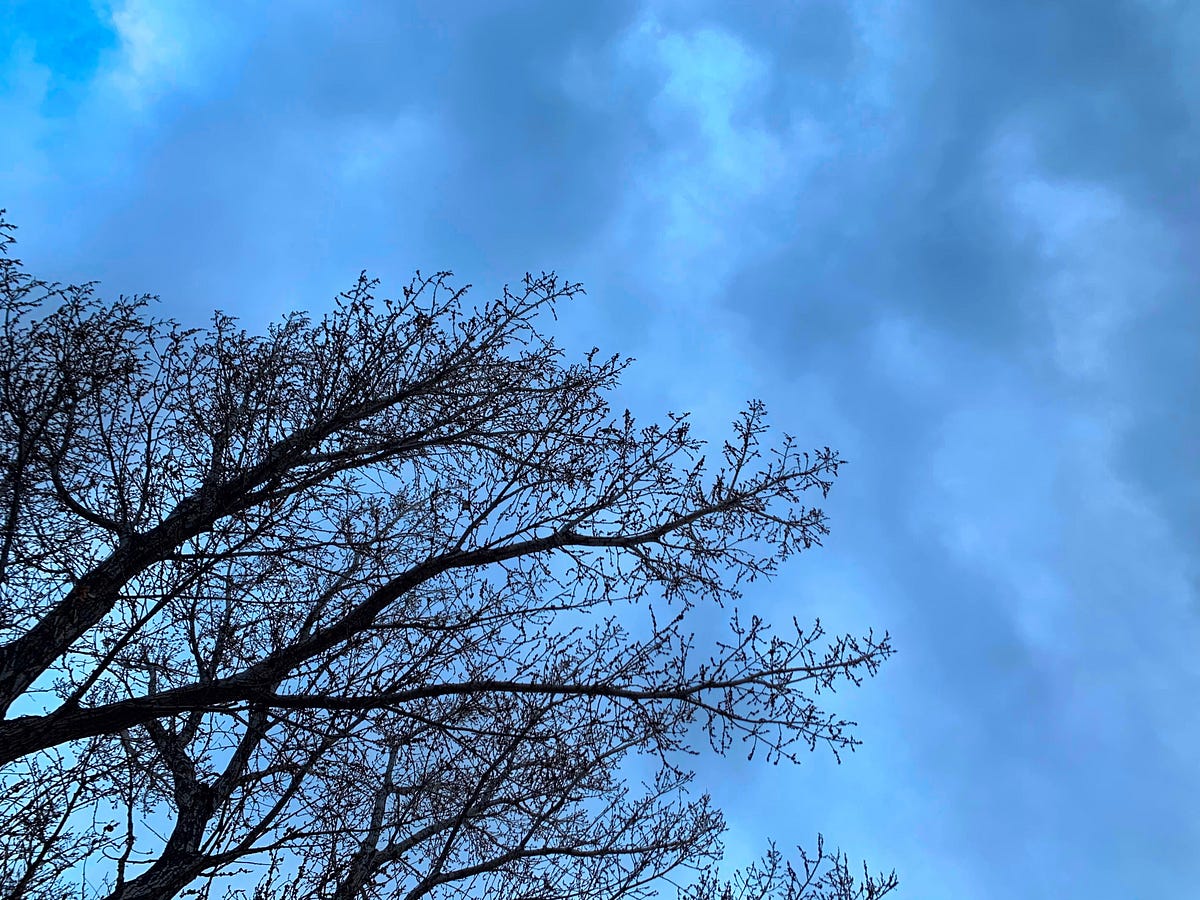
The Voyage, IX — What stillness teaches
Originally published on Medium, December 21, 2025.
This is Day 9 of a 12-part series on building an Internet governed by physics instead of policy. Start at Day 1: Departure.
“Sol sistere — the sun stands still.” — Latin, origin of “solstice”
I write this on the solstice.
The Earth is tilted 23.5 degrees on its axis. Today, in the northern hemisphere, that tilt points us as far from the sun as we’ll get. The days have been shortening since June. Tonight, darkness wins.
Cultures across the world have marked this moment for thousands of years. Stonehenge aligns with the solstice sunset. The Hopi hold ceremonies as the sun reaches its southern house. Newgrange, in Ireland, was built five thousand years ago so that solstice light would pierce its inner chamber for exactly seventeen minutes. Humans have always known: some darkness is not to be fought. Some darkness is to be honored.
Tomorrow, the sun returns. But tonight, it stands still.
A few years ago, Nayomi and I took our daughters camping in the Gila Wilderness for the first time. We brought all three dogs and met our friend Ruth with both of her pups.
We set up near the Cosmic Campground, a Dark Sky Sanctuary. The nearest light is forty miles away, across the Arizona border. The Forest Service has stated they do not plan to install permanent lighting. The darkness is protected.
In the Gila, the darkness is complete. The kind of dark where you can feel the Earth turning, where the stars aren’t points of light but presences, where the Milky Way spills across the sky so thick it casts shadows.
Stout, our dog, was uncertain of everything. The fire. The tent. The whole arrangement. Mila and Zia had no such hesitation — they ran with Ruth’s dogs until they were ready to warm up by the fire.
I watched my daughters’ faces in the firelight. They were looking up, into the Milky Way. Into the past. Staring at the beginning.
The light reaching their eyes had traveled thousands of years. Some of it left its source before humans had writing, before we had cities, before anyone had named the constellations they were tracing with their fingers. They were seeing time itself, written in photons.
Nayomi and I were witnessing them witness it.
Does the darkness witness us back? I don’t know what to call what I felt that night. But something was present that wasn’t any of us. Something old. Something that had seen everyone who ever looked up from this ground.
The Gila has been dark for a long time.
Darkness is the original condition and the canvas everything else is painted on.
That’s what darkness gives you. Not absence. Presence. A witness.
The land here is old. And it teaches you everything you need to know.
I didn’t learn about cultural or sacred boundaries from a book. I learned from a man whose name I never knew, on a job site, when I was thirteen years old.
I wanted money for video games. My father, my cousin Albert, and I were a crew — hired by my second cousin David for a contract with one of the Pueblos just north of Albuquerque. They were preparing for their annual feast day.
Our job: deploy five generators, dig shallow trenches, bury heavy cables running from each generator to a 2x4 post sunk into the ground. Each post held a circuit breaker box and outlets.
For three days a year, they would have running electricity.
I was the youngest, so I mostly did the cable work. Pulling the long runs off the spool. Digging trenches. Carrying posts and panels to wherever they’d be planted. My father and Albert handled the electrical connections and powering up the towable generators — the things that required experience.
My stomach hurt from laughing. My face hurt from smiling. Those two together were relentless. I’ll always remember the good times we had, the stories and lessons they shared with me.
This wasn’t our only job together. Random, difficult jobs needing done, we were a crew and I was there when they needed extra hands. Looking back, those were some of the most formative days of my life. I just didn’t know it then.
We were walking the grounds, planning where to place each generator. A man — older than my father, maybe fifty — pointed to a round adobe structure near the middle of all the buildings.
“That’s off limits,” he said. “You can’t even look in there.”
He didn’t pause. He kept walking, kept explaining the layout and where he thought the panels should go. But something in how he said it told me everything I needed to know. He held that building sacred. And with those few words, we had an understanding.
I didn’t question it. I didn’t sneak a look. I didn’t ask what was inside. The boundary was real. I could feel it. The correct response was not to explain my good intentions. Not to ask for an exception.
The correct response was to honor his words.
The fire passes through us. Albert passed recently — much too young. But the laughter is still here, in everyone who worked beside him.
We’ve built six dimensions into the Context Tensor. Six ways the environment speaks. Mass, Momentum, Heat, Time, Inertia, Observer. Six variables that flex and flow, that rise and fall with conditions, that shape trust as a continuous gradient or spectrum.
The seventh dimension is different.
We call it Soul. And it doesn’t flex.
The first six dimensions are floats. Continuous values. When Heat rises, trust contracts proportionally. When the Observer score increases, behavior adjusts along a spectrum. The physics bends. It responds. It negotiates with conditions.
Soul is binary. Zero or one. Permitted or forbidden. No gradient. No negotiation.
When S equals one, the action is denied. Not because the environment is stressed. Not because the Trust Score is insufficient. Because the boundary is sacred. Because some things are not subject to conditions.
That man at the Pueblo didn’t calculate whether I had enough trust to look inside. He didn’t weigh my trajectory or assess my intentions. He simply said: this is not for you. The building was S equals one.
But here’s where I need to be careful.
Everything else in this framework is physics. Heat rises, trust contracts. Momentum spikes, friction increases. No one decides this. The environment speaks, the math responds.
S equals one is different. Someone has to decide what’s sacred. A community says “this boundary exists.” That sounds like policy. A human decision that could, in theory, be changed. Lobbied. Reinterpreted. “We have a policy against X, but in this case…”
So let me be precise about what we’re building.
The mechanism is physics. Once S equals one, no override. No appeal. No exception. The Silent Veto from Day 3 responds to environment — the storm passes, stability returns, capabilities expand again. The Soul dimension is not weather. It is geography. The Rio Grande Gorge isn’t a policy. It’s there. You don’t cross it by arguing. You don’t lobby the canyon. You walk around, or you fall.
But the content — what triggers S equals one — that’s not ours to decide. Communities don’t create sacredness. They identify what was always there. The boundary existed before we built systems. We are finally building systems that can honor it.
This is sovereignty, not policy. Recognition, not regulation.
And we can’t design it alone. We’ve done that before. Technologists in rooms, making decisions about boundaries they’ve never encountered, for communities they’ve never consulted.
That’s how we got the systems we’re replacing.
The “Geofence of Spirit” (we can call it that for now, but the Community will name it) has to be defined by the communities whose geography it protects. Not consultation after the fact. Partnership from the start.
This framework gives us the mechanism. S equals one as absolute veto and evaluated before the other tensors. But what triggers that veto, who holds that authority — that’s not a technical problem. That’s a relationship. One we have to build, not impose.
Let me be clear: I am inviting each and every one of you to the conversation. And when we have two people, we’ll double it. When we have four people, we’ll double again. WE are building this intentionally and with everyone at the table.
I think about what this means in practice.
Treaty obligations that governments have ignored for centuries: now immutable. An AI agent operating in certain territories cannot take certain actions because S equals one. The treaty is not a policy to interpret. It’s a constraint to honor. The physics enforces what politics wont.
Cultural protocols that communities have maintained since before contact: now structural. Data collected under certain conditions cannot be processed in ways that violate those conditions. Not because of terms of service. Because the Soul dimension makes violation impossible.
Sacred sites — geofenced in the deepest sense. Not a sign that can be ignored. Not a regulation that can be lobbied. A boundary that the physics itself refuses to cross.
This is not a feature we’re adding. It’s a foundation we’re honoring. It is human-centered and human-first.
The wayfinders knew this too.
The Pacific was vast, but it was never empty. Islands belonged to peoples. Waters carried protocols. The navigators who crossed those distances did not sail everywhere. They knew which shores welcomed them, which required permission, which were not theirs to approach.
The stars guided them. But the stars did not override the sacred. Navigation was mastery. And mastery included knowing where not to go.
That’s what we’re building into the physics. The shore that requires permission. The boundary that does not bend. The constraint that cannot be optimized, lobbied, or overridden by any Trust Score ever earned.
The fire that does not yield.
The sun stands still today.
Tomorrow, it begins its return. The days will lengthen in seconds. The light will grow in minutes. And we will continue toward landfall, toward the archipelago, toward Blue Zones where the physics holds.
But this day, I pause. I honor what does not move.
I recognize the boundaries that exist beyond my convenience, beyond my credentials, beyond my autonomy.
I think of that man at the Pueblo, pointing to the round adobe structure, telling a teenage kid something he’d never unlearn: that place is not for you. I think of the understanding that passed between us. The trust that came from his certainty and my willingness to honor his words. Looking back, those words weren’t just his own, they were the words of every ancestor he descended from.
I think of my daughters’ faces in the firelight, witnessing the photons that had traveled longer than human memory. The past arriving, finally, at their eyes. The darkness making it visible.
We name the seventh dimension not because we invented it. It was always there. Asking to be seen. Asking to be honored. Asking us to build systems that finally respect what communities have known forever:
Some ground is sacred. Some data is sovereign. Some boundaries are not ours to cross.
Sol sistere. The sun stands still.
And so do I. In reverence. In recognition.
In Practice
For CISOs: The Geofence of Spirit (S = 1) is an absolute veto. Some boundaries cannot be crossed, even under optimal conditions. Identify what these are for your organization — sacred data, protected communities, inviolable policies.
For Infrastructure Engineers: Implement S as a Boolean dimension in the Context Tensor. When S = 1, the action is denied regardless of all other factors. No exceptions. Make this cryptographically enforceable.
For AI/ML Teams: Your agents must be able to recognize sacred boundaries and refuse to cross them. This is not a limitation — it’s a requirement for operating in the real world, where some things are non-negotiable.
Find other dark sky places here.
Ethics when visiting a Pueblo for Feast Day.
Tomorrow: Archipelago — The Voyage, X
Previous: Day 8 — Horizon | Next: Day 10 — Archipelago