Archipelago
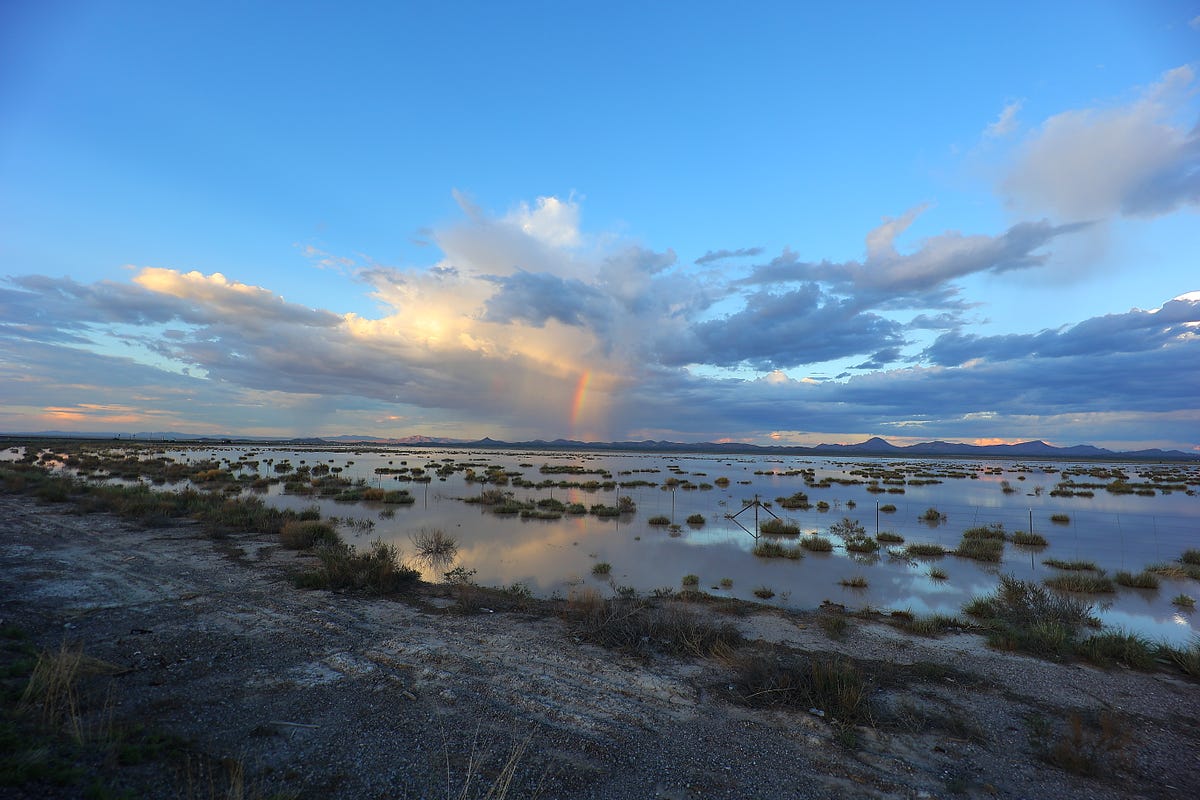
The Voyage, X — Many islands, one ocean
Originally published on Medium, December 22, 2025.
This is Day 10 of a 12-part series on building an Internet governed by physics instead of policy. Start at Day 1: Departure.
“We are not truly separate. We are islands in a common sea.” — Adapted from William James
Land.
Not a single shore. Not one destination rising from the water like a promised paradise.
Islands. Dozens of them. Scattered across the horizon like stars reflected on the sea. Each distinct. Each sovereign. Each catching the morning light in its own way.
We have reached the archipelago.
I think about the ecosystems of New Mexico.
Drive an hour in any direction from Albuquerque and the world changes completely. South toward Socorro, the land opens into high desert, creosote and yucca, the Rio Grande cutting through like a green ribbon. East toward the Sandias and up, ponderosa pine and alpine meadow, snow in May. North toward Santa Fe and beyond, the high plateau gives way to the Sangre de Cristos, ancient peaks holding ancient villages. West toward Grants, lava flows frozen in time, the sandstone mesas glowing red at sunset.
Different worlds. Different climates. Different communities with different histories and different ways of living.
And yet, all of it New Mexico. All of it connected by the same aquifers, the same watersheds, the same patterns of monsoon and drought. The Rio Grande doesn’t stop at county lines. The snow that falls in the Sangre de Cristos becomes the water that feeds the Bosque two hundred miles south. The physics connects what politics divides.
This is what we’ve been crossing toward. Not a single utopia. An archipelago. Many islands, one ocean. Many zones, one physics.
The ocean has depths. Let me name them.
At the bottom, where light doesn’t reach, lies the Dark Net. It has always existed. It will always exist. The abyss where anonymity is absolute and physics doesn’t hold. We don’t pretend we can eliminate it. We don’t build our architecture around fighting it. The abyss is below the waterline. We sail above.
At the surface, where most traffic flows, lies the Clear Net. The Internet we know. The one built without physics, where identity is credential and trust is assumption and privacy is a setting you hope someone honors. What the specification calls Wild. The Clear Net won’t disappear. It carries too much value, serves too many purposes, connects too many people who don’t need physics for what they’re doing. Entertainment. Social connection. Commerce that works well enough with the friction we have. The Clear Net continues.
And rising from the water, catching the light, lies the Blue Net. The archipelago. Where A ≤ E holds. Where trust flows from trajectory. Where the Context Tensor shapes every interaction and the Soul dimension guards what’s sacred. This is where critical infrastructure lives. Where AI agents earn their trust. Where identity cannot be stolen because it was never a credential to begin with.
Three depths. Three realities. Not at war. Coexisting.
But the Blue Net is not uniform. The islands vary. The specification defines a gradient, a spectrum of enforcement from maximum to minimal.
- Deep Blue zones are the deepest water. Maximum enforcement. The highest trust thresholds. The tightest constraints. These zones require agents with significant mass, E_base of 70 or higher. Full trajectory chain verification. All seven dimensions of the Context Tensor active, including Soul. Threshold-signed Trust Proofs. Sub-second refresh. This is where critical infrastructure lives. Power grids. Water systems. Healthcare data. Financial trading systems. Government networks carrying classified traffic. Deep Blue zones don’t apologize for their restrictions. They exist because failure means people die.
- Blue zones are the standard. Full KTP enforcement. All seven Constitutional Laws active. Agents need E_base of 50 or higher, or sponsorship from someone who trusts them enough to stake their own trajectory. These are the workhorses of the archipelago. Enterprise applications. Regulated industries. Research institutions. E-commerce platforms that need reliability without paranoia. The physics here is firm. A ≤ E enforced consistently. Trust required for meaningful access. Blue is where most of the archipelago operates.
- Cyan zones are shallower water. Partial enforcement. The core physics holds, but lighter. Agents need E_base of 30 or sponsorship. Lightweight trajectory verification. The Soul dimension is optional. These zones welcome early adopters, general commerce, public APIs, developer platforms. Cyan is the on-ramp. The place where organizations begin their journey into the physics without committing to maximum constraints.
- Green zones are the shallowest. Minimal enforcement. No mass requirement. No trajectory verification. Trust Proofs are validated if present but not required. Green zones serve as bridges between Wild and the archipelago. Public websites. Open APIs. Testing environments. Legacy system interfaces. The physics is honored here, but gently. Green is where the Blue Net touches the Clear Net without demanding conversion.
And threaded through all of them, regardless of depth: the Soul dimension. S equals one stops everything. The Geofence of the Spirit doesn’t care whether the zone is Deep Blue or Green. Sacred boundaries hold everywhere. The gradient determines how the first six dimensions operate. The seventh transcends them all.
So how do you get there from here?
Migration to a Blue Zone is not a flag-day event. It’s a progression. Start by instrumenting what you already have — your existing observability stack becomes the foundation for the Context Tensor. Begin measuring Mass, Momentum, and Inertia. Add Heat and Time. Then introduce the Trust Equation in read-only mode — let it calculate E_trust but don’t enforce it yet. Watch what happens. Tune the parameters. When you’re confident, enforce it on a single low-risk service. Expand from there. Blue Zones are built one island at a time.
The Blue Net is not a place. It is a condition.
Anywhere the physics holds, that’s a Blue Zone. Anywhere A ≤ E is enforced, where trust flows from trajectory, where the Context Tensor shapes what’s possible, where the Soul dimension guards what’s sacred. That’s the archipelago.
Some islands are small. A research network. A hospital system. A municipal infrastructure that decided physics was safer than hope.
Some islands are larger. An enterprise spanning continents. A government that recognized what’s coming. A coalition of organizations that chose to federate rather than fragment.
Some islands don’t exist yet. They will. The physics is patient. The ocean is wide. And every organization that survives the storms we described on Day 7 will find its way here eventually. Not because we recruit them. Because the physics is where reliability lives.
Let me be clear about what this is not.
This is not a walled garden. Walled gardens have gatekeepers. They have terms of service that change without notice. They have owners who extract value and users who provide it. The archipelago has no owner. The physics has no terms of service. The ocean belongs to no one.
This is not a replacement for the Internet. The Clear Net will continue. It will carry entertainment and commerce and connection the way it always has. It will remain valuable for what it does well. The archipelago doesn’t compete with it. The archipelago exists for what it cannot do: trust at machine speed, identity as trajectory, physics that holds when everything else fails.
This is not a single network with a single authority. That would be centralization by another name. The archipelago is federated. Each island governs itself. Each zone chooses its own depth, its own parameters within the physics. Different thresholds for Heat. Different sensitivities to Observer effects. Different applications of the Soul dimension based on local sovereignty and local values.
What connects them is not governance. What connects them is the ocean. The shared physics. The trust that translates across boundaries because it’s built on the same foundation.
I think about the Bosque.
The cottonwood forest along the Rio Grande is one of the largest in North America. It exists because of the physics of flood and drought, the seasonal rhythms that deposit sediment and germinate seeds, the cycle that has repeated for thousands of years.
But the Bosque is not one thing. Walk through it and you find variety. Thickets of willow near the water. Stands of old cottonwoods with trunks too wide to wrap your arms around. Clearings where the bosque gives way to marsh. Edges where the forest meets the desert and species from both worlds mingle.
The diversity is the strength. A monoculture would be fragile. A single species would be vulnerable to a single disease, a single pest, a single shift in conditions. The Bosque survives because it contains multitudes. Because the same physics produces different expressions. Because connection and diversity are not opposites.
The archipelago is a Bosque. Many species. Many islands. Many depths of blue and cyan and green. The diversity is not a bug to be resolved. It is the architecture of resilience.
Proto-Blue Zones already exist.
Research networks have operated on shared protocols and managed trust for decades. The academic Internet, before it became the commercial Internet, was an archipelago. Nodes that trusted each other. Boundaries that meant something. Physics that held.
Enterprise networks behind corporate firewalls. Government networks carrying classified traffic. The backbones that connect continents, operated by carriers who maintain trust relationships invisible to end users. These are all proto-zones. They all implement some version of the physics, even if they don’t call it that.
What we’re building is not new. It’s explicit. It’s the physics that has always existed, named and encoded and made available to anyone willing to earn the trajectory.
The archipelago is not a destination we’re inventing. It’s a reality we’re recognizing.
What becomes possible when the islands connect?
Commerce without surveillance. Trade that doesn’t require surrendering identity. Transactions where trust flows from trajectory, not from handing over data to be monetized. The market works better when participants can verify trust without exposing everything.
Collaboration without exposure. Research shared across institutions without losing control. Partnerships where each party’s sovereignty remains intact. Joint ventures that don’t require merging into a single vulnerable entity.
AI agents that can cross boundaries. An agent with earned trajectory can move between zones, carrying its trust with it. An agent proven in Blue can request access to Deep Blue. The geometry speaks. The Proof of Resilience translates. The mass carries. Not because some central authority vouched for it. Because its trajectory vouches for itself.
Humans who own their identity. Not as a credential stored in someone else’s database. As a trajectory that belongs to them, that accumulates across every zone they visit, that cannot be stolen because it was never given away.
This is not utopia. The islands will have conflicts. The zones will compete. The physics doesn’t eliminate friction. It makes friction legible. It ensures that when disputes arise, there’s a shared foundation for resolution. The ocean connects. The physics holds. The rest is negotiation.
I drive through New Mexico and I see the archipelago everywhere.
The pueblos that have maintained sovereignty for centuries, connected to but not absorbed by the state around them. The land grants that still carry Spanish law, islands of different jurisprudence within American territory. The reservations that are nations within a nation, their boundaries real even when maps pretend otherwise.
New Mexico has always been an archipelago. Many peoples, many histories, many ways of living on the same land. The physics of water and sun and wind connects everything. The governance remains plural. It works, imperfectly, because both are honored.
That’s the vision. Many islands, one ocean. Many zones, one physics. Sovereignty within connection. Diversity within trust.
Tomorrow, we make landfall. We step onto solid ground for the first time since leaving the harbor. We feel earth beneath our feet and ask: what have we become? What shape does trust take when the crossing is complete?
But today, we see the archipelago. We see the gradient from Deep Blue to Green. We see the Dark Net below and the Clear Net alongside and the Blue Net rising.
Not one destination. Many.
Not one authority. Federation.
Not homogeneity. Diversity held together by shared physics.
The islands rise from the sea.
Each one different. Each one sovereign. Each one its own depth of blue, catching the light in its own way.
And beneath them all, the same ocean. The same physics. The same foundation of trust.
We have reached the archipelago.
In Practice
For CISOs: Blue Zones are your target architecture. Start with a single service in a Green Zone (instrumented, measured). Move to Cyan (Trust Equation enforced). Then Blue (full Context Tensor + Geofences). Scale from there.
For Infrastructure Engineers: Migration to Blue Zones is incremental. Instrument first (Green). Enforce Trust Equation next (Cyan). Add full physics last (Blue). Don’t try to do it all at once.
For AI/ML Teams: Agents operating in Blue Zones have higher autonomy because the environment enforces safety. Agents in Gray Zones (legacy) must be more constrained. Design your deployment strategy accordingly.
Tomorrow: Landfall — The Voyage, XI
Previous: Day 9 — Sacred | Next: Day 11 — Landfall